Call 858.413.4940

How to Get From San Diego Airport to Train Station
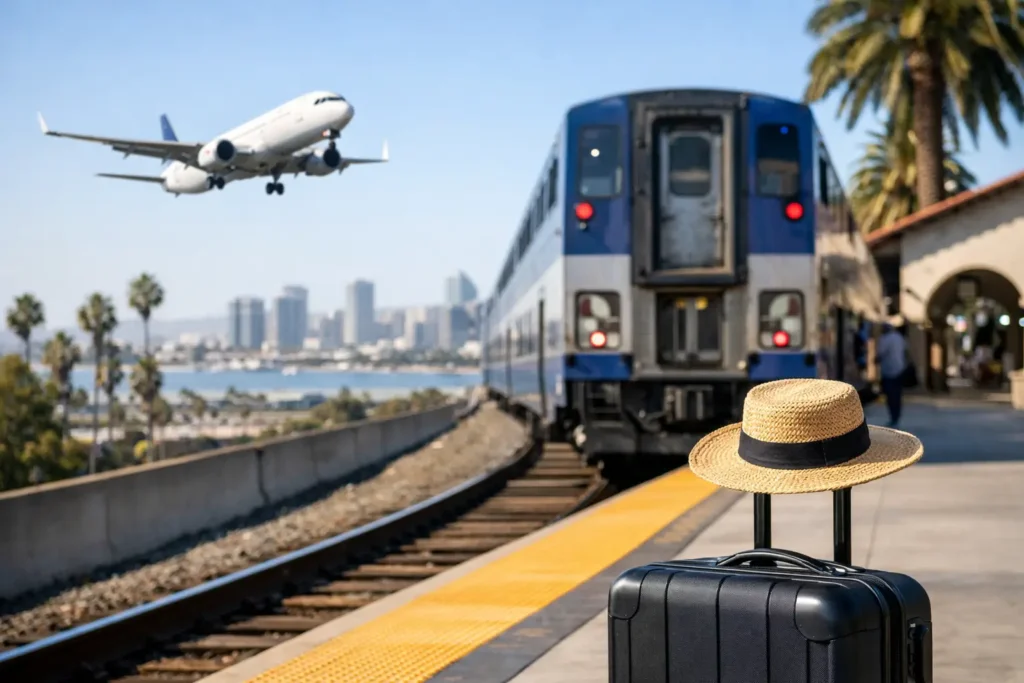
Landing at San Diego International Airport and trying to make a train connection usually comes down to one thing – how much time and margin for error you have. If you are searching for how to get from San Diego Airport to train station options, the good news is that the route is short. The part that matters is choosing the right ride based on your luggage, group size, arrival time, and how tightly your day is scheduled.
For most travelers, the train station in question is Santa Fe Depot in Downtown San Diego. That is the main Amtrak and COASTER station, and it is also connected to local transit. From the airport, Santa Fe Depot is only a few miles away, but airport traffic, curbside congestion, and timing can still affect your trip.
How to get from San Diego Airport to train station quickly
If speed and convenience matter most, a taxi, rideshare, or pre-booked private car is usually the simplest answer. The drive from the airport to Santa Fe Depot often takes around 10 to 15 minutes in light traffic. During busy arrival periods, it can take longer, especially when curb pickup areas are crowded.
A taxi is easy if you want to walk out and go. Rideshare can work well too, but app-based pickup sometimes adds waiting time depending on driver availability and airport pickup flow. A private car service is the most controlled option because the ride is reserved in advance, which helps if you are traveling for business, carrying a lot of luggage, or moving with family or a group.
If cost is your top concern and your schedule is flexible, public transportation is available. It is usually cheaper than a direct ride, but it is not always the best choice when you are racing a departure clock or handling multiple bags.
The main transportation options
Taxi from San Diego Airport to Santa Fe Depot
Taxis are one of the most direct ways to reach the train station. You can usually find them at designated airport pickup areas without needing to plan ahead. For solo travelers and couples, this is often a practical middle ground between convenience and price.
The trade-off is that fares can vary with traffic, and during peak times there may be a short wait. If your train is leaving soon, it is still one of the safer choices because it avoids transfers and keeps the trip simple.
Rideshare service
Rideshare is popular because travelers are already used to using apps. In many cases, the fare is competitive, and the trip itself is short. If you are arriving during a quieter part of the day, this can be a smooth option.
The catch is airport pickup logistics. Depending on the terminal, pickup rules, surge pricing, and driver availability, rideshare is not always the fastest at the exact moment you need it. For travelers with a firm Amtrak departure time, that uncertainty matters.
Private airport car service
A reserved airport car service makes the most sense when reliability matters more than shaving off a few dollars. This is especially true for business travelers, families with children, older passengers, military travelers with gear, and small groups trying to stay together.
With a pre-arranged ride, you know what vehicle is coming, you know the pickup is planned, and you avoid the usual guesswork after landing. A licensed and insured professional service also gives you a clearer standard of safety and accountability than simply taking the cheapest ride available. If you are coordinating a larger party, a sprinter van or SUV can make the airport-to-station transfer much easier than splitting into multiple cars.
Airport shuttle or shared ride
Shared shuttles can lower the cost, but they are not always the best fit for train connections. Because the driver may be picking up or dropping off other passengers, travel time can stretch beyond the direct route.
This works better when your train departure is not immediate and you want to reduce transportation cost. If your connection window is tight, shared rides are usually less predictable than private service.
Public transportation
Public transit is the budget option, but it comes with more steps. Depending on the current route setup, you may need to use an airport shuttle connection and then transfer to local transit toward Downtown. That means more walking, more waiting, and less flexibility if you are carrying large bags.
For light packers with extra time, it can be a reasonable choice. For visitors unfamiliar with San Diego, or anyone arriving late at night or during a busy travel day, it can feel less efficient than the price savings suggest.
Which train station do you need?
Before choosing your ride, confirm the station name on your ticket. Many people mean Santa Fe Depot when they ask how to get from San Diego Airport to train station, but not every rail trip starts there. Some travelers may be heading to Old Town Transit Center instead, which also serves rail passengers and can actually be a better match for certain routes.
Old Town is also close to the airport, and in some cases it may be slightly easier depending on traffic direction and your final train line. If you are taking Amtrak or the COASTER, double-check the departure station before you leave the terminal. One wrong assumption can cost more time than the drive itself.
What to consider before you choose
A short trip does not always mean an easy one. The best option depends on your real travel conditions, not just the map.
If you have less than 30 minutes before boarding, take the most direct ride you can get. That usually means taxi or pre-booked private transportation. If you are traveling with children, strollers, or several suitcases, avoid anything that requires transfers. If you are part of a group, booking one larger vehicle is often more efficient than trying to coordinate several pickups.
Budget also matters, but it should be weighed against risk. Saving money on transit does not help if you miss a train and have to rebook. The cheapest ride is not always the lowest-cost decision.
Arrival time can change everything as well. Midday on a normal weekday may be straightforward. Late-night arrivals, convention traffic, holiday periods, and weekend tourism surges can all affect wait times around the airport.
Best option by traveler type
Business travelers usually do best with a reserved car service or direct taxi because timing is the priority. Families often prefer a private SUV or van for luggage space and fewer moving parts. Couples on a relaxed schedule may be fine with rideshare. Solo travelers with light bags and extra time can consider public transit if cost is the deciding factor.
For wedding parties, tour groups, and event travelers, private group transportation is the practical choice. Keeping everyone on the same schedule matters more than managing several separate rides. That is where a provider with sedans, SUVs, sprinter vans, and larger group vehicles can simplify the plan.
Timing tips for a smoother transfer
Give yourself more buffer than the drive time suggests. A 10-minute route can still turn into a stressful connection if baggage claim is slow or pickup traffic backs up. If your train departure is fixed, plan around the full airport process, not just the ride.
Keep your phone charged, confirm the station address, and know whether you are heading to Santa Fe Depot or Old Town before pickup. If you are booking a private ride, reserve it in advance and include your flight details so timing can be tracked more accurately. If dependable airport-to-station transportation is your priority, XM Limo offers pre-booked options designed for travelers who want licensed, insured service and a clear pickup plan.
San Diego is an easy city to move through when the basics are handled early. Pick the ride that matches your schedule, not just your budget, and your train connection is far more likely to stay simple. If you want less waiting, less guessing, and a direct path from terminal to station, call or Reserve Online before your flight lands.